How we approach it
Online stores compete for attention in more places than ever: Google’s results, Amazon’s search, social feeds and now AI shopping answers. Each channel has its own rules, but they reward the same thing — product information that is clear, complete and relevant to what the buyer actually asked.
For e-commerce clients we usually start with the pages and products that already earn revenue, then decide where organic search, Meta ads or Amazon PPC will add the most.
How we help online stores
We usually start with the pages and products that already earn revenue, because improving them pays back fastest. Category pages are optimized for the broad searches they can win, product pages for the specific ones, and both are marked up with structured data that search engines and AI shopping answers can read. Where links will help, we build them to category and product pages, not just the homepage. On Amazon, we structure campaigns so spend follows the search terms that convert, measured against your margins.
From our case studies
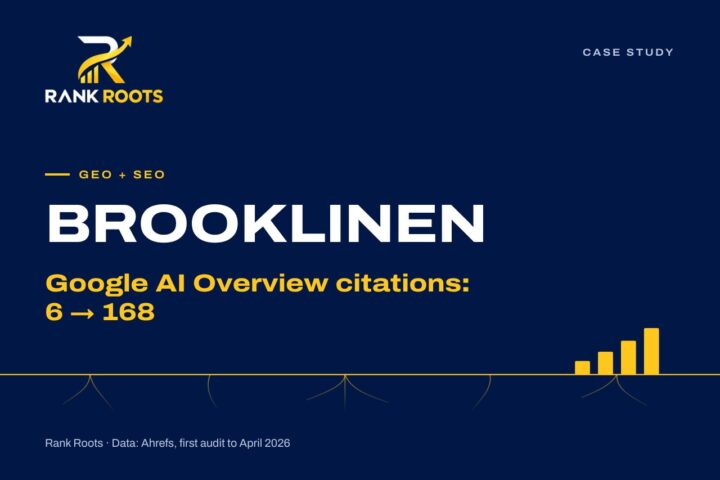
- Brooklinen: Generative Engine Optimization for a US direct-to-consumer bedding brand, with Google AI Overview citations rising from 6 to 168 (Ahrefs, first audit to April 2026).
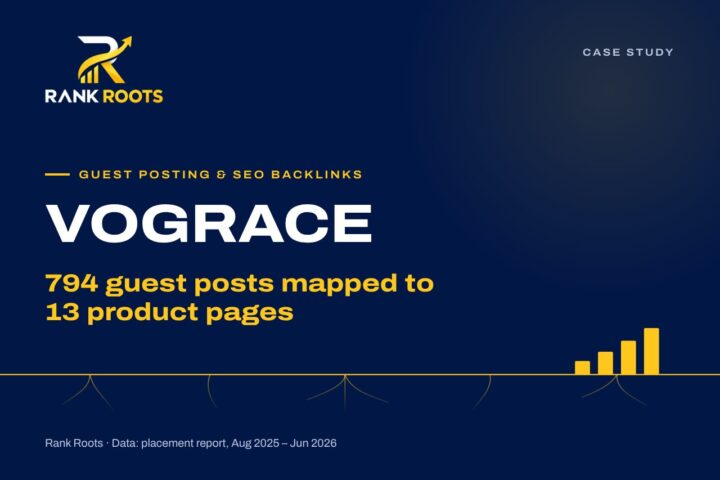
- Vograce: 794 recorded guest-post placements mapped to 13 product and collection pages for a custom-merchandise brand.
Related reading