Taking new projects

Industries

E-commerce & Amazon Sellers

Product and category pages that rank, ads that respect your margins, and marketplace campaigns built on real data.

How we approach it

Online stores compete for attention in more places than ever: Google’s results, Amazon’s search, social feeds and now AI shopping answers. Each channel has its own rules, but they reward the same thing — product information that is clear, complete and relevant to what the buyer actually asked.

For e-commerce clients we usually start with the pages and products that already earn revenue, then decide where organic search, Meta ads or Amazon PPC will add the most.

How we help online stores

We usually start with the pages and products that already earn revenue, because improving them pays back fastest. Category pages are optimized for the broad searches they can win, product pages for the specific ones, and both are marked up with structured data that search engines and AI shopping answers can read. Where links will help, we build them to category and product pages, not just the homepage. On Amazon, we structure campaigns so spend follows the search terms that convert, measured against your margins.

From our case studies

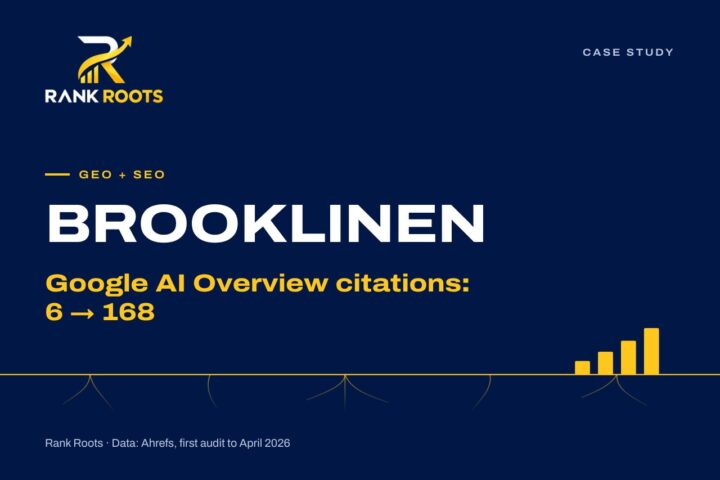
  • Brooklinen: Generative Engine Optimization for a US direct-to-consumer bedding brand, with Google AI Overview citations rising from 6 to 168 (Ahrefs, first audit to April 2026).
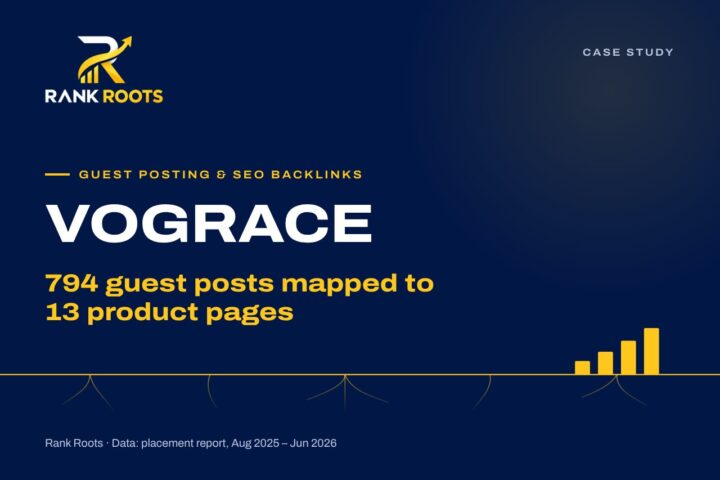
  • Vograce: 794 recorded guest-post placements mapped to 13 product and collection pages for a custom-merchandise brand.

Related reading

Challenges, approaches and measurement

Common challenges

  • Thin or manufacturer-copied product descriptions
  • Category and filter pages competing with each other in search
  • Competing with marketplaces and large retailers for the same searches
  • Ad spend rising faster than sales — a high ACoS or falling return on ad spend
  • Product information that AI shopping answers can't easily read

Campaign approaches

  • Optimize the pages that already earn revenue before creating new ones
  • Write product and category copy around real buyer questions
  • Use structured data so products, prices and availability are machine-readable
  • Run paid campaigns against margin targets, not just sales targets

Reporting and measurement

  • Organic sessions, conversions and revenue to optimized pages, in Google Analytics
  • Impressions, clicks and search queries per page, in Google Search Console
  • ACoS and ad spend against sales, in Amazon Ads reporting
  • Purchases and cost per result in Meta Ads Manager, read alongside your own store data

Examples from this industry

Vograce case study: 794 guest posts mapped to 13 product pages

E-commerce & Amazon Sellers Vograce

Vograce: 794 guest posts mapped to 13 product pages

A bulk, keyword-mapped guest-posting campaign for a custom-merchandise brand: 794 placement URLs recorded across four batches between August 2025 and June 2026, with live checks and Ahrefs data from October 2026.

placement URLs recorded in four batches 794 Placement report, Aug 2025 – Jun 2026

Brooklinen case study: Google AI Overview citations 6 to 168, Ahrefs, first audit to April 2026

E-commerce & Amazon Sellers Brooklinen

Brooklinen: getting cited in AI answers

Generative Engine Optimization for a US direct-to-consumer bedding brand. Between the first audit and April 2026, Ahrefs counted Google AI Overview citations rising from 6 to 168 and ChatGPT citations from 1 to 53.

Google AI Overview citations 6 → 168 Ahrefs, first audit → Apr 2026

Talk to us about your market

Tell us what you sell, who you sell to and where. We will suggest where to start.